🧠 Self-Growth & MindsetCapt. Dharamveer Singh
Military Officer & War Hero
2.6K
🧠 Self-Growth & Mindset
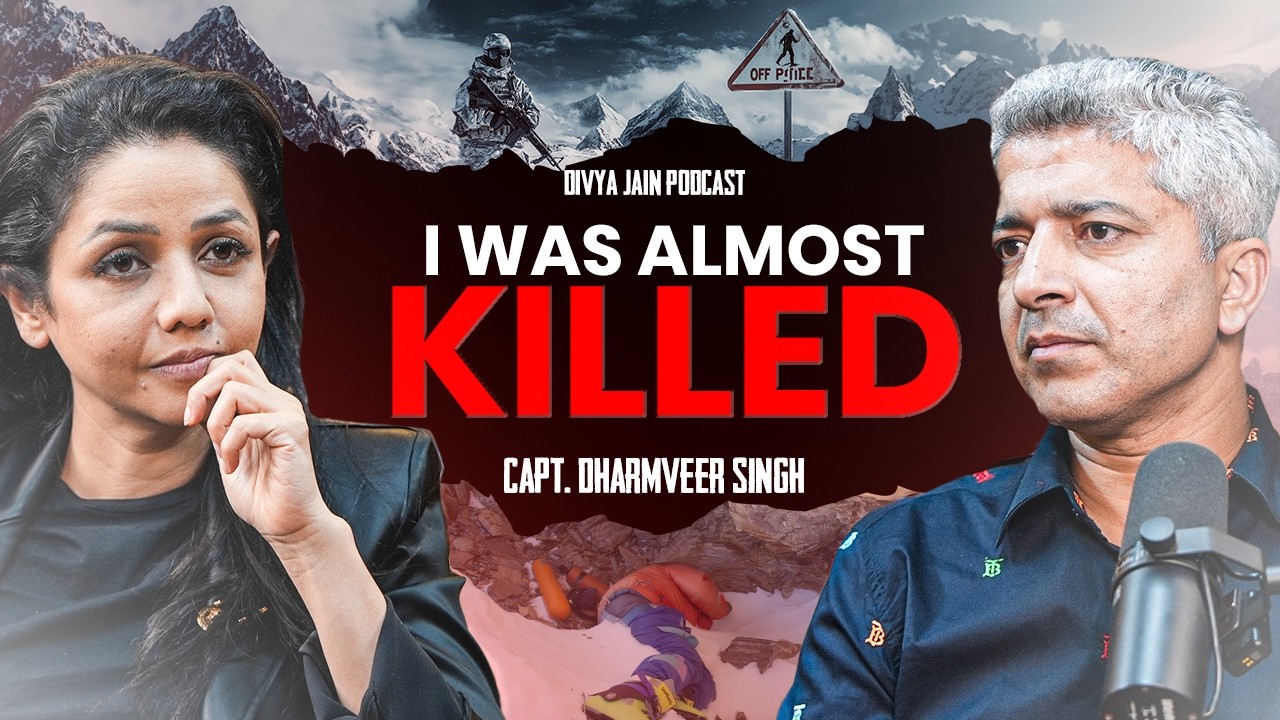
Episode: My Family Didn't Know If I Was ALIVE ft. Capt. Dharamveer Singh
About Capt. Dharamveer Singh
Capt. Dharamveer Singh's episode "My Family Didn't Know If I Was ALIVE" attracted 2,644 views, yet the profound impact of his harrowing story extends far beyond view counts to touch the hearts and minds of everyone who encounters his testimony. His willingness to share one of the darkest periods of his life and military service exemplifies the courage that characterizes his entire career. His account reveals the often-invisible emotional toll that military service extracts not only from service members themselves but from their families who endure anguish and uncertainty.
Capt. Dharamveer Singh's military career placed him in some of India's most challenging and dangerous security environments. His specific posting involved operational areas where the military confronts significant security threats, whether counter-terrorism operations, border security, or other high-risk assignments. The nature of such postings means that personnel work in hostile territory, face genuine threats to their survival, and operate in conditions where communication with the outside world is severely restricted. These operational areas are chosen because they represent critical security challenges where military presence is essential; they are not chosen for safety or comfort but because national security demands that soldiers be deployed there.
The specific period Capt. Singh describes—when his family didn't know if he was alive—represents one of the most agonizing experiences possible for military families. During certain operations, military personnel may operate in communication blackout conditions where no information can leave the operational area. This operational security necessity means that families receive no updates about their loved ones for extended periods. Days stretch into weeks without knowing whether their family member has been injured, killed, captured, or is simply operating under communication restrictions. The uncertainty itself becomes a form of psychological torture, and the imagination fills the void with the worst possibilities.
The emotional toll of this uncertainty on his family must have been devastating. A spouse worries about widowhood, raising children alone, losing a lifetime partner. Parents worry about losing a son. Children worry about losing a parent. Extended family members experience collective anxiety and anticipatory grief. The family cannot move forward with normal life while suspended in this state of not-knowing. They cannot grieve fully because the loved one might be alive. They cannot celebrate or experience joy because it feels wrong to do so while fearing the worst. The waiting period disrupts sleep, affects work performance, creates constant stress, and generates a sense of helplessness—there is nothing the family can do to change the situation or even verify whether their family member is alive.
Capt. Singh's specific operational situation, which he describes within operational security bounds, involved circumstances that created extended communication blackout. The details he provides offer glimpses into the reality of military operations in hostile territory—the challenges faced by personnel deployed there, the dangers they confront, and the constraints that operational security imposes on communication. His account helps civilians understand that military operations are not clean, controlled, or risk-free but involve real dangers and situations where lives hang in the balance.
The psychological warfare aspect of his experience deserves recognition. Combat and military operations involve not only physical danger but intense psychological stress. Soldiers operating in hostile territory face the constant knowledge that they could be killed at any moment, the stress of maintaining vigilance and readiness, and the cumulative emotional impact of witnessing violence and death. Extended operations compound this stress. The uncertainty about whether he would survive that operation, combined with the knowledge that his family was in anguish, would have created additional psychological burden beyond the immediate operational dangers.
The bond between soldiers in extreme situations represents one of the most powerful human connections, and Capt. Singh's testimony likely reflects this. When personnel face genuine danger together, when they depend on each other for survival, when they share experiences of fear, courage, and resilience, the bonds formed transcend ordinary friendship. Fellow soldiers become like brothers, bound by experiences that few civilians can understand. During extended dangerous operations and communication blackouts, these bonds sustain personnel—the knowledge that their comrades are depending on them, that they must protect each other, that they are not alone in facing danger. The sense of unit cohesion and mutual commitment becomes a primary source of motivation when circumstances are darkest. Capt. Singh's comrades likely supported him emotionally and practically during the dangerous period, and those relationships would have been crucial to his surviving the ordeal.
His eventual reunion with family represents a moment of profound relief and joy. After the period of not-knowing, learning that he was alive and would be returning home would have generated overwhelming emotion. The reunion itself—seeing family members face-to-face after the period of fear and separation—would have been intensely meaningful. Yet the reunion also marks the beginning of processing the trauma of the experience. The family must process their own psychological experiences of fear and uncertainty, while Capt. Singh must process his experiences of danger and stress. The reunion is joyful but also complex, as family members recognize that the experience has changed everyone involved.
The lasting psychological impact of such experiences cannot be overstated. Capt. Singh likely carries memories of the operation's dangers, the fear he experienced, the knowledge of how much his family suffered during the communication blackout. Military personnel exposed to dangerous operations and combat often develop post-traumatic stress symptoms—intrusive memories, hypervigilance, emotional numbing, or anxiety reactions. Some develop full PTSD. Many experience long-term effects on relationships, sleep, emotional regulation, and their sense of safety in the world. The knowledge that one's service created significant suffering for family members can intensify psychological impacts and create guilt even when the service member was following orders and doing their duty.
Families of military personnel affected by such experiences also face lasting impacts. Spouses may experience anxiety about future deployments, difficulty trusting that the service member will return safely, hypervigilance when in communication blackout periods, or changed perspectives on the relationship and priorities. Children may experience behavioral changes, anxiety, or difficulty understanding why a parent's job creates such danger and suffering for the family. The family's collective experience of the communication blackout becomes a defining shared trauma that shapes family dynamics going forward.
Capt. Dharamveer Singh's willingness to publicly share this harrowing experience serves multiple important functions. He brings visibility to the experiences of military personnel and their families that normally remain private. He helps civilian society understand the personal costs of military service beyond casualty statistics. He honors his comrades who experienced similar situations and the families who suffered alongside them. His testimony stands as powerful evidence of the sacrifice embedded in military service—not merely the risk of death but the psychological and emotional toll on service members and families. Through sharing his experience, he helps ensure that the nation does not take the sacrifices of its military personnel and their families for granted.
Related Podcast Episodes
Long-form conversations featuring or related to Capt. Dharamveer Singh
Related Shorts
Quick clips on similar topics
Get DJP's Secret Blueprint
Divya's personal playbook on life, money, and growth — distilled from 900+ podcast conversations. Enter your name and email to get instant access.